Forget about RDS and focus on your radio’s streaming, RDS is just Morse code

I do not want, in any way, to diminish the vital importance of Morse code. It saved lives and was created with the best of intentions. The point here is another: we are no longer in the era of the invention of the wheel, today we use alloy wheels and seek to extract the maximum performance from our engines.
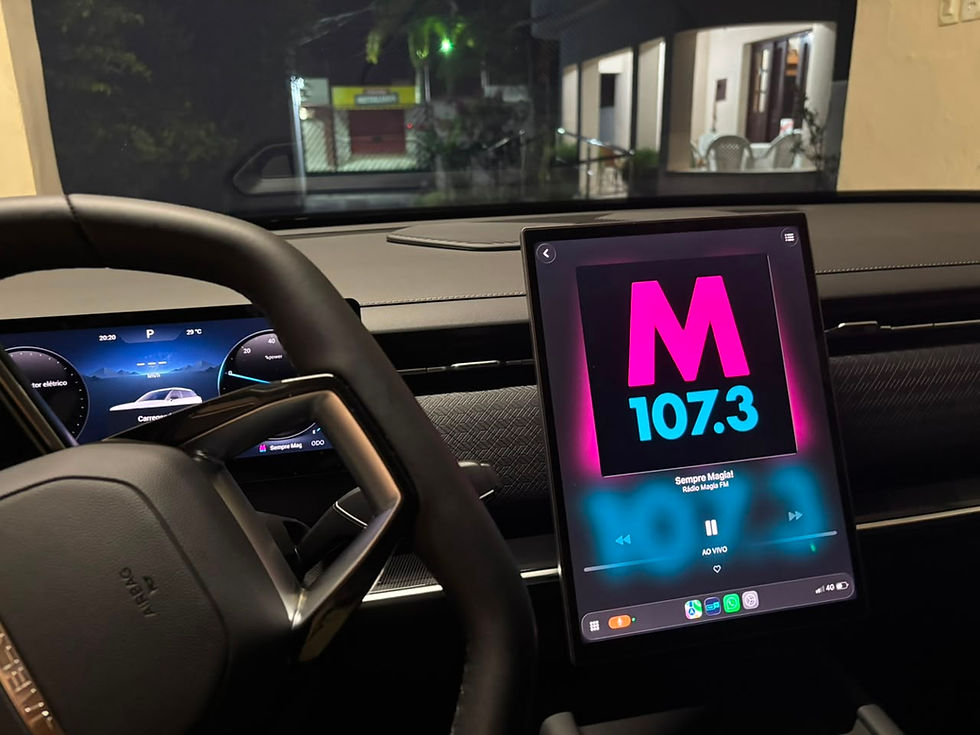
Imagine leaving Natal heading toward João Pessoa via BR-101 while listening to a radio station. You begin the trip and continue with clean audio, free of static. Over the course of about 50 kilometers, there is no perceptible interruption at all. At one moment or another, there may be perhaps five seconds of silence and then the sound returns stable and clear. On the screen, the song title and artist appear, and beyond that, weather information and illustrated headlines with images.
Is this a new technology?
Not exactly. This is streaming, which delivers an audio range that can reach 20 Hz to 20,000 Hz, while FM operates, in practice, between about 50 Hz and 15,000 Hz. In other words, streaming reaches wider frequency extremes, with deeper bass and more crystalline highs, with one crucial point: no perceptible variation in quality and no static.
“But internet coverage is unpredictable.”
That argument made sense in 2010, not in 2026. Today, on routes such as Natal to João Pessoa, it is entirely plausible to have connectivity around 98 percent of the time. On a 100 minute trip, that would mean approximately 98 minutes of continuous high quality audio and only 2 minutes total of occasional silence, perhaps 30 seconds in one stretch, 15 in another, 5 in another, and 1 minute and 10 seconds in the last.
The question is:
How could RDS, limited to the display of basic text, possibly compete to the point of making the listener abandon streaming in order to hear the same station on FM during this journey?