top of page

Strategy Engineering

autor2jpeg_edited_edited.jpg

Why doesn’t Brazil make an effort to digitize radio? Why doesn’t it adopt DAB, HD Radio, or DRM?

What would it actually mean to digitize radio in Brazil? Would it simply be about improving the audio quality perceived by listeners? Would it eliminate hiss and other transmission noise? Would coverage change? Would we have a more complete “RDS” with additional features?

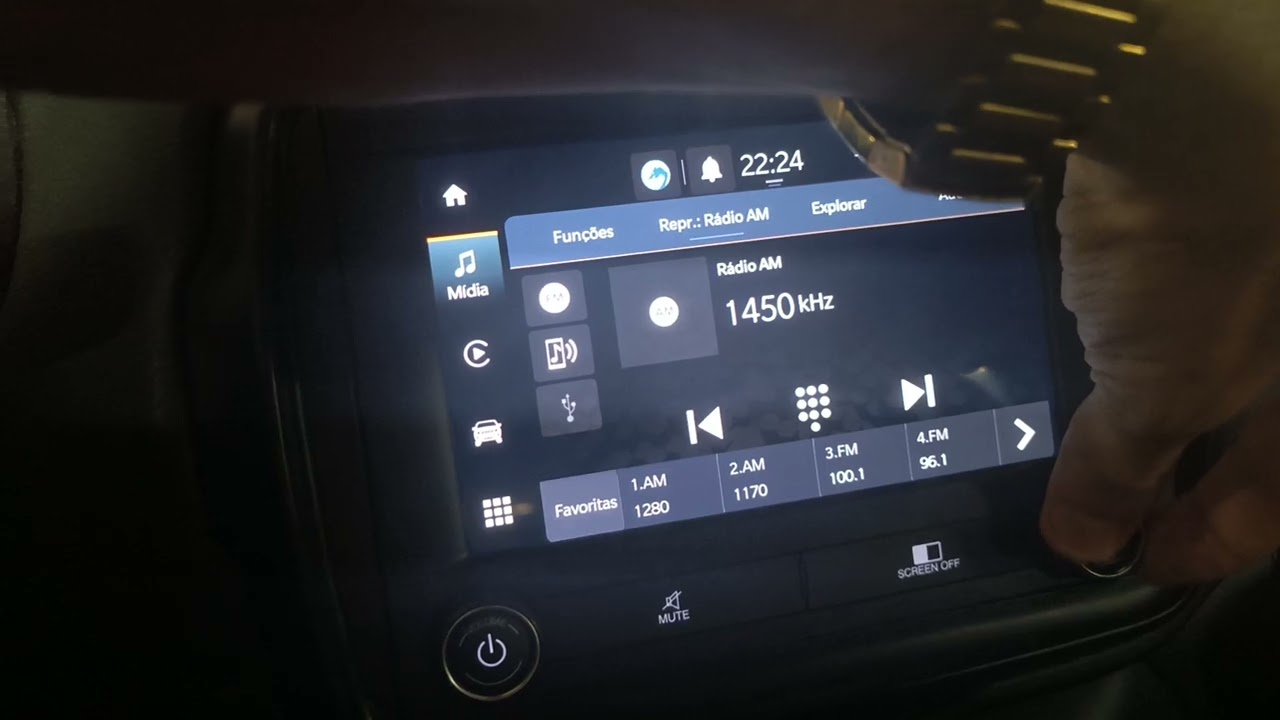
  • Would digitalization necessarily mean being able to tune, in the car, to a station with all these characteristics?

  • Today, in Brazil, is it impossible to listen to the digital version of my favorite FM station with significantly better audio quality?

  • Is it impossible, under current conditions, to keep listening to that same station for many more kilometers beyond the reach of its analog FM signal?

  • Is it impossible today to receive on screen information coming from this digital version, including, for example, the song title and even associated images?


Now, a reality check: if I had to travel from Natal to Recife, about 280 kilometers, during a World Cup final between Brazil and Argentina, and I wanted to follow the match closely with clean audio, better than AM or FM, without noise, would that be impossible today in Brazil? No? Are you sure?

If I offered you R$100 for an idea that would allow exactly that during this trip, listening to the same station from departure to arrival with clean audio, are you really saying you could not tell me in a few minutes how to do it?

Is it really impossible to leave Natal and arrive in Recife listening to audio under those conditions?


Or


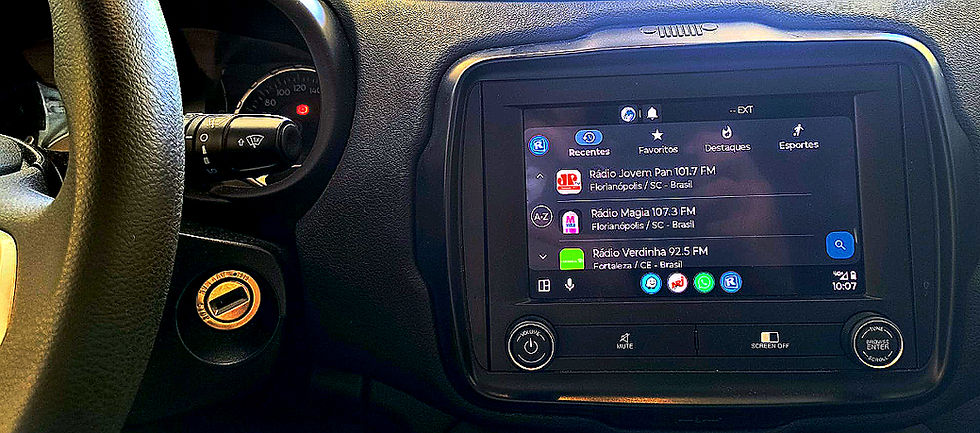
What if Bluetooth and 5G networks existed? Oops, they already do.


Would digitalization necessarily mean being able to “tune in,” in the car, to a station with all these characteristics?

Answer: We already have a way to “tune in” when we choose which stream to listen to.

Is it impossible today, in Brazil, to listen to the digital version of my favorite FM station with much higher audio quality?

Answer: Streaming is already a digital transmission. Technically well-structured stations use the digital output of their processors directly into the streaming server, the same base used in systems such as HD Radio, DRM, or DAB. A stream in AAC+ from 64 kbps is already enough to deliver audio superior to any analog FM transmission.

Is it impossible today, in Brazil, to continue listening to the digital version of my favorite FM station for many more kilometers beyond the reach of its analog version?

Answer: Streaming itself does not depend on the distance from the station, but on 4G and 5G network coverage. Coverage is not absolutely total, but it is practically continuous in populated areas and along a large portion of highways. This allows, for example, traveling from Natal to Recife with active streaming for most of the route.

Is it impossible today, in Brazil, to receive on-screen information coming from the digital version of my favorite FM station, including images of the content being played?

Answer: Depending on the platform used by the station, it is possible to display images, text, and metadata in a much more robust way than any RDS-based system.

This is the mountain of counterarguments to radio digitalization in Brazil. Denial does nothing to help win over the market. There is a correct path to achieve this goal, and it is not the one adopted by the three major standards.


These points serve as a basis to understand the real challenge. Digital radio via UHF, VHF, FM, AM, or shortwave would need to deliver a very significant leap to become attractive in Brazil. It would have to compete in a scenario where car multimedia systems are rapidly moving toward native internet access and, even today, simply pairing a smartphone via Bluetooth already allows access to any station through digital streaming.

Is there a way out of this scenario? Yes, there is. There are technically viable paths already under testing. And it is definitely not about a “sophisticated typewriter” trying to compete with computers.

But it is important to be clear: after more than two decades since the early 2000s, the attempt to implement traditional digital radio standards has become much more difficult. Today, the question many broadcasters ask is direct and pragmatic: why digitize FM?

Even so, radio cannot remain analog indefinitely. At some point, there will be a gap between the analog model and the dominance of digital streaming. And it is precisely in that space that the solution will emerge. It exists, but this is not yet the moment to detail it.


Comentários


Dúvidas/orçamentos

grupo_edited.png
bottom of page