top of page

Strategy Engineering

autor2jpeg_edited_edited.jpg

Have radio stations entered denial?

“Denial” in radio is an institutional defense mechanism. It is not merely stubbornness or isolated arrogance, but a structural behavior of the industry aimed at avoiding a paradigm shift.

What this denial is

It is the tendency of the radio sector to:

  • minimize real threats

  • overestimate its current relevance

  • justify stagnation with weak arguments


In other words, radio behaves as if it were still at the center of the media ecosystem, when in practice it has already lost that position.

How this denial manifests

1. Use of “comforting” arguments

The sector often relies on phrases such as:

  • “we are leaders”

  • “radio still has great reach”

  • “in emergencies, radio is essential”

These statements are not false, but they are irrelevant to the core issue: the loss of everyday attention. Having reach does not mean being chosen.

2. Distorted comparisons with digital

A classic example:

  • “Spotify has a small share compared to radio”

This argument ignores:

  • quality consumption time

  • engagement

  • rapid growth

It is an analysis based on a static snapshot, not on trends.

3. Confusion between infrastructure and relevance

Radio confuses:

  • being available with being desired

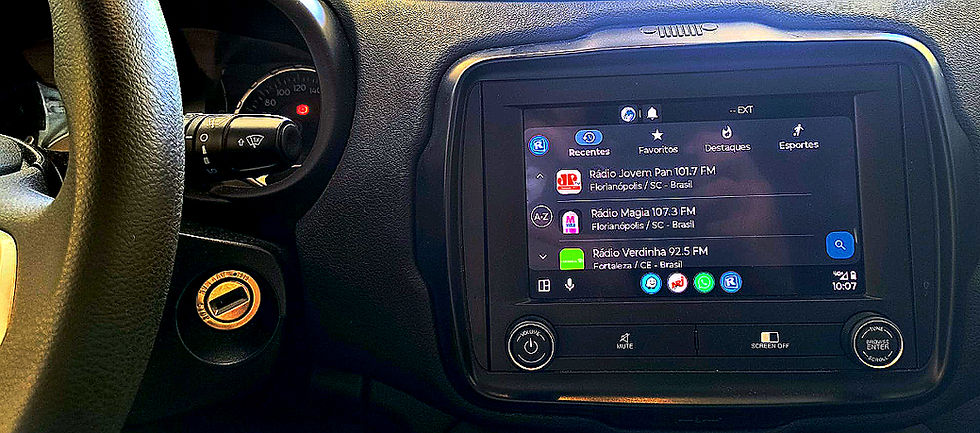
It is still everywhere (car, smartphone, etc.), but that does not guarantee actual use.

4. Attachment to the past as validation

The industry frequently uses its history as a shield:

  • “we’ve been here since 1940”

  • “we’ve been through other crises”

But this crisis is different. Now the competitor is not another radio station, but the entire digital ecosystem.

5. Underestimation of behavioral change

There is a clear difficulty in accepting that:

  • the listener is no longer passive

  • today, the listener chooses, skips, and personalizes

Radio still operates as if the listener were willing to accept whatever is broadcast.

Why this denial is dangerous

Because it delays critical decisions.

In practice, this leads to:

  • maintaining outdated models

  • lack of investment in real innovation

  • decisions driven by pride rather than data

It is equivalent to a company remaining optimistic while losing market share month after month.

The most critical point

Denial prevents an accurate diagnosis.

And without an accurate diagnosis, there is no viable solution.

Radio begins to treat symptoms:

  • creating apps

  • improving transmission

  • adjusting marketing

But it ignores the core issue: the product has lost perceptual competitiveness.

Many broadcasters still do not see streaming as core.They insist on terrestrial digital without traction.They fail to understand that the problem is not delivery, but value proposition.


The denial mindset in radio is:

A misalignment between internal perception and external reality, sustained by comfortable metrics and historical narratives.

Radio still believes it is competing with other radio stations, when in fact it is competing with everything.


Denial vs Preparation

1. Product (core business)

Aware stations

  • Redefine radio as an attention product, not as transmission

  • Restructure programming for:

    • retention

    • recurrence

    • identification

  • Treat content as a strategic asset:

    • opinion

    • personality

    • strong local context

  • Reduce dependence on “generic playlists”

Stations in denial

  • Maintain schedules based on:

    • repetitive music

    • formulaic hosting

  • Believe that “playing hits” is still a differentiator

  • Do not reposition the product

  • Operate as if it were still 2005

2. Streaming (not as an accessory, but as a core axis)

Aware stations

  • Treat streaming as the primary distribution channel

  • Ensure:

    • stability (near 100% uptime)

    • low latency

    • consistent audio quality

  • Integrate streaming with:

    • cars

    • apps

    • smart speakers

  • Design for a continuous, frictionless experience

Stations in denial

  • Streaming is:

    • secondary

    • poorly configured

    • unstable

  • Inconsistent bitrate

  • Poorly developed or nonexistent apps

  • Fail to understand that:


    the audience has already migrated, even if the station has not

3. Use of data

Aware stations

  • Monitor in real time:

    • concurrent listeners

    • peaks and drops

    • time-based behavior

  • Identify:

    • tune-out points

    • content that retains

  • Adjust programming based on data

Stations in denial

  • Rely on:

    • occasional surveys

    • internal perception

  • Lack real-time behavioral insights

  • Make decisions based on:

    • intuition

    • ego

    • tradition

4. Competitive positioning

Aware stations

  • Understand they compete with:

    • Spotify

    • YouTube

    • TikTok

    • podcasts

  • Seek differentiation through:

    • relevant live content

    • proximity

    • identity

Stations in denial

  • Believe they compete with:

    • other local FM stations

  • Ignore the digital ecosystem

  • Underestimate behavioral change

5. Listener experience

Aware stations

  • Focus on:

    • convenience

    • continuity (car → mobile → home)

    • perceived control

  • Reduce friction:

    • easy access

    • fast start

  • Create a sense of:

    • relevant companionship

Stations in denial

  • Ignore UX

  • Depend on:

    • old habits

    • “turning on the radio by default”

  • Fail to perceive habit erosion

6. Audio (processing and sonic signature)

Aware stations

  • Invest heavily in:

    • modern processing

    • consistency between FM and streaming

  • Aim for:

    • audio competitive with digital platforms

  • Understand that:


    sound quality influences retention

Stations in denial

  • Audio is:

    • inconsistent

    • distorted or dull

  • Do not prioritize processing

  • Underestimate psychoacoustic impact

7. Content and talent

Aware stations

  • Develop:

    • strong voices

    • relevant personalities

  • Create content that:

    • builds connection

    • cannot be replaced by algorithms

Stations in denial

  • Reduce staff

  • Automate without strategy

  • Lose human identity

8. Long-term strategy

Aware stations

  • Accept that:

    • the old model is over

  • Test:

    • new formats

    • new distribution models

  • Focus on:

    • future sustainability

Stations in denial

  • Try to preserve:

    • the current model

  • Delay difficult decisions

  • React only when the crisis is already evident

Aware stations:operate based on external reality

Stations in denial:operate based on internal narratives

Aware

  • Lose less audience

  • Retain better

  • Monetize more effectively in the medium term

  • Have a path to transition

In denial

  • Lose relevance silently

  • Maintain revenue by inertia (for a while)

  • Collapse when:

    • the advertising market reacts


Comentários


Dúvidas/orçamentos

grupo_edited.png
bottom of page