The definitive battle in digital radio: IP RADIO X (DAB + DRM + HDRADiO)

Atualizado: 13 de mai.
All digital radio systems eliminate the “static” and the typical quality fluctuations of analog audio. However, not all of them are able to maintain the same transmission efficiency over long distances. In some cases, in order to avoid reception failures and packet loss, broadcasters reduce the audio bitrate, trading audio quality for greater signal robustness and coverage.

Coverage
IP RADIO
Virtually worldwide coverage. Signal distribution uses the already established fixed and mobile internet infrastructure. In Brazil, considering only mobile internet, practically 97% of the population is covered by 4G/5G networks.
Does not require reducing audio quality to achieve longer distances.
DAB
Coverage is limited by the deployment of an expensive infrastructure involving transmitters and repeaters.
DRM
Coverage is limited by the transmitter’s propagation range. In FM bands, coverage can be comparable to analog FM, while in AM bands it can reach much greater distances. Lower audio bitrates may be used to improve signal robustness and reception stability.
HD RADIO
Coverage is limited by the transmitter’s propagation range. In FM, digital coverage is generally comparable to analog FM, although robustness decreases near the edge of coverage. In AM, digital operation may face additional propagation and interference challenges, especially at night.
Investments and Costs for Broadcasters
IP RADIO
Does not require major additional transmission infrastructure, since broadcasters can leverage their existing streaming systems. In many cases, broadcasters already use digital audio directly from the audio processor, which is also suitable for other digital radio platforms.
IP RADIO can operate with very high audio quality without the same practical robustness limitations normally associated with terrestrial digital broadcasting systems. However, large-scale distribution may still involve costs related to bandwidth, CDN services, servers, and application maintenance.
DAB
Requires dedicated digital transmission infrastructure, including multiplexing systems, transmitters, repeaters, and related network architecture. Depending on the operational model, broadcasters may either invest directly in infrastructure or pay multiplex and transmission leasing fees.
DRM
Requires digital transmission infrastructure, including compatible transmitters, exciters, and related components for the new transmission architecture. In some cases, existing AM or FM systems may be adapted or upgraded.
HD RADIO
Requires digital transmission infrastructure, including compatible transmitters, exciters, and related transmission components. Implementation may also involve licensing costs and royalties associated with the proprietary technology.
Investments and Costs for Listeners
IP RADIO
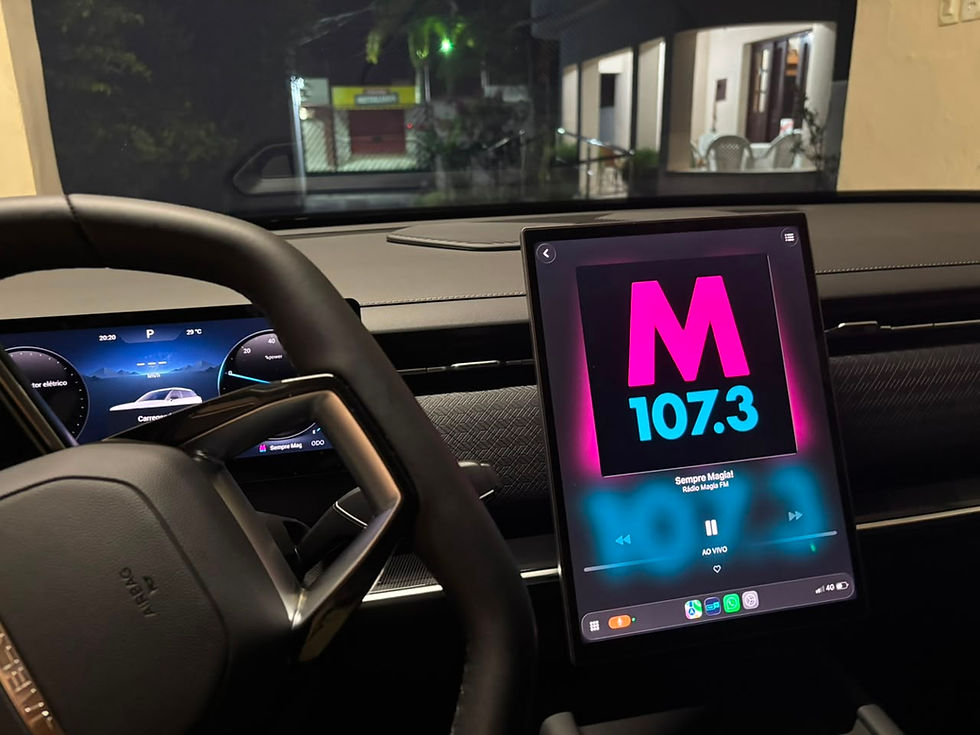
Cars can update their existing multimedia systems and become compatible with IP RADIO.
Listeners already own compatible devices, reducing the need for dedicated radio hardware. However, reception depends on mobile internet or broadband access, which may generate ongoing costs related to data usage, subscription plans, or internet services. Battery consumption on portable devices is also typically higher compared to traditional broadcast radio reception.
Many vehicle models already include built-in internet connectivity, with some manufacturers even offering up to two years of internet access without additional subscription costs.
DAB
Requires a DAB-compatible receiver, whether as a dedicated radio, automotive receiver, or integrated chipset in consumer electronics. After purchasing the receiver, reception is free, with no recurring data or connectivity charges, since the system operates via terrestrial broadcasting.
Coverage limitations may require listeners to acquire external antennas or more advanced receivers in weak-signal areas.
DRM
Requires a DRM-compatible receiver or compatible SDR platform. Depending on the implementation model, listeners may need dedicated radios, automotive receivers, or updated devices with DRM decoding support.
After acquiring compatible equipment, reception is generally free, since the system uses terrestrial broadcasting. Availability and receiver prices may vary significantly depending on market scale and regional adoption.
HD RADIO
Requires an HD Radio-compatible receiver. After purchasing the equipment, listeners do not incur recurring internet or data costs, since reception is based on terrestrial broadcasting.
In some regions, receiver availability remains more limited compared to conventional FM radios, which may increase acquisition costs.
Deployment Time for Broadcasters
IP RADIO
By leveraging audio already transported through streaming infrastructure, broadcasters can make the service available immediately.
DAB
Requires time for importing transmitters, antennas, and other support equipment. Part of the infrastructure would likely depend on government implementation according to national coverage policies. The process may also involve repeaters or gap fillers, requiring substantial investment and deployment time.
DRM
Requires time for importing transmitters and other support equipment.
HD RADIO
Requires time for importing transmitters and other support equipment.
Deployment Time for Listeners
IP RADIO
Focusing on automotive usage as an adoption indicator, IP Radio adoption would consolidate once vehicle multimedia systems are updated to receive radio stations.
Cars connected through smartphone mirroring systems or equipped with built-in internet connectivity would represent the final stage of implementation and consolidation of the system.
This can be understood as an almost immediate implementation model already experienced by people around the world today, considering that connected cars and dedicated applications already fully emulate the radio experience.
Immediate. Most listeners already own compatible devices such as smartphones, smart TVs, computers, connected cars, and smart speakers. In many cases, no new hardware is required — only internet access and an app or browser.
DAB
Slow to medium term. Listeners require DAB-compatible receivers or compatible automotive systems. Adoption depends on the availability and affordability of receivers in the local market, as well as vehicle fleet renewal.
DRM
Slow. Requires DRM-compatible receivers, which remain relatively limited in global consumer markets outside specific regions such as India. Automotive integration and large-scale consumer adoption are still restricted.
HD RADIO
Medium to slow term. Requires HD Radio-compatible receivers. Adoption is generally linked to newer vehicle models and specific receiver imports. Outside North America, receiver availability remains relatively limited, which may delay mass adoption.
Station Availability
IP RADIO
Thousands of stations, virtually an unlimited number of local, regional, national, and international broadcasters, including both physical radio stations and purely virtual radio operations. As a result, even the number of local stations available becomes significantly larger, in addition to external stations.
DAB
Dozens of stations.
DRM
Dozens of stations.
HD RADIO
Dozens of stations.
Broadcasting License Requirements
IP RADIO
No bureaucracy or broadcasting license is required to operate.
DAB
Bureaucracy, costs, and long licensing processes.
DRM
Bureaucracy, costs, and long licensing processes.
HD RADIO
Bureaucracy, costs, and long licensing processes.
Organic Digital Radio vs Inorganic Digital Radio
In practice, we are facing a comparison between an organic digital radio system (IP RADIO), which does not depend on centralization or external incentives for expansion and scalability, and other systems that require strong consortiums, investments, and additional adoption efforts (HD RADIO, DRM, and DAB).
DELAY
In terrestrial digital radio:
DAB+ uses buffering, AAC+ encoding, multiplexing, and error correction;
DRM also uses encoding, interleaving, and processing;
HD Radio presents noticeable delay compared to hybrid analog FM.
Delay is not an exclusive characteristic of IP Radio. It is a natural consequence of modern digital processing.
In television, this has already become completely normalized.
The old analog TV had virtually instantaneous response.
Practical Reality
What defines the listener’s experience is not the existence of a few seconds of delay, but rather:
continuity of playback;
absence of failures;
ease of access;
sound quality;
availability anywhere.
That is why younger audiences practically do not consider delay a decisive factor. The generation accustomed to:
Spotify,
YouTube,
Netflix,
Twitch,
podcasts,
live streams,
sports streaming,
Small digital delays as part of the modern media ecosystem.
In many cases, streaming even offers a subjectively superior experience compared to FM:
no static;
no multipath interference;
no fading;
no distortion;
no abrupt quality variation;
maintaining consistent audio quality over hundreds or thousands of kilometers.
That is why the debate about delay is often more ideological and corporate than actually connected to real audience behavior. The average consumer simply wants to access content conveniently and reliably. Whether the audio arrives 8 or 15 seconds after FM rarely changes the actual listening experience.