Your radio station needs to shut down its AM transmitter now

I need to talk about a situation in Brazil, in my city, to illustrate how this same problem severely affects the evolution of radio. Below, I will explain how this same delay is also evident in the United States and other countries.
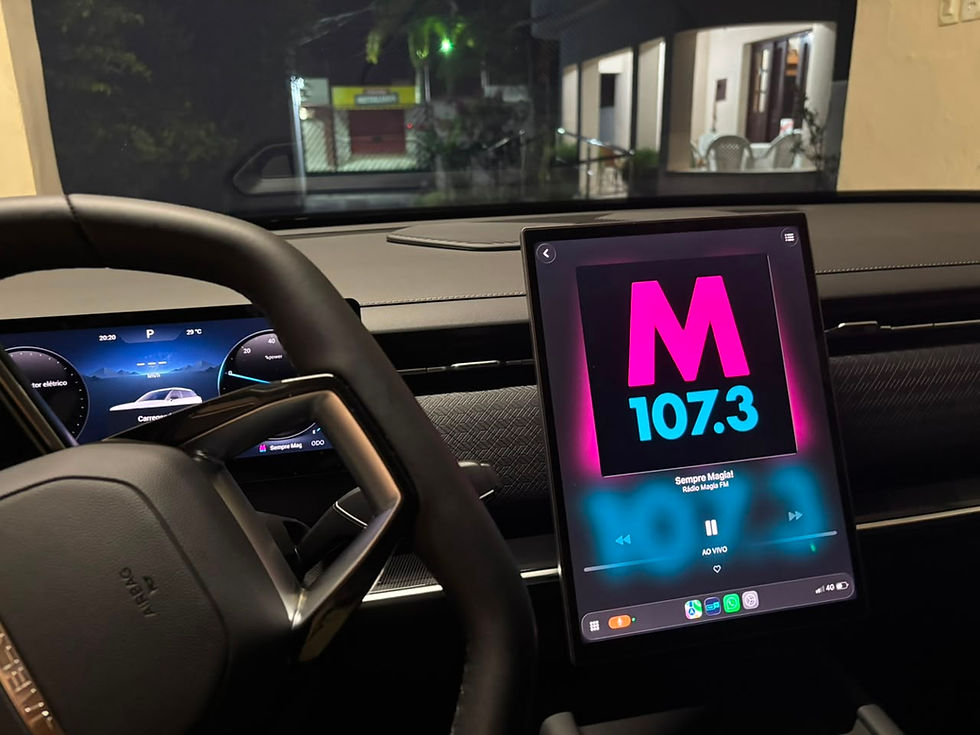
I listen to Manchete AM 760 via the internet in São José de Mipibu, Rio Grande do Norte. Here, there is no longer any “social layer without smartphones using RadiosNet,” the most popular radio app in the world, which gathers thousands of stations from Brazil and worldwide without the need for one app per station, which is a foolish and inefficient idea. Here is the link: https://www.radios.com.br/.../radio-manchete-760-am.../13670
If they do not shut down the AM transmitter, they will go bankrupt.
Technically, AM does not support high frequencies. Nothing beyond about 5 kHz, and there are no deep bass frequencies either. Therefore, this idea of “perfect sound” is questionable. Just getting close to an LED lamp is enough to severely degrade the signal.
What is my interest in listening to Manchete? Honestly, just curiosity. The station should focus on its audience in Rio de Janeiro. At most, there are probably me and three other listeners in Rio Grande do Norte, plus maybe fifteen in Ceará, listening for about 35 minutes per month.
Additionally, mobile and ISP coverage has drastically reduced shadow areas. When I travel from here to Recife, for example, there are practically no signal gaps.
Being an AM fan is easy. Paying the electricity bill of a 760 kHz transmitter is not
Manchete AM needs to shut down its medium wave transmitter immediately, as it only generates expenses that could be invested in better FM equipment. And when I say shut down AM, I mean focusing exclusively on FM transmission.
Some may argue this would abandon rural listeners hundreds of kilometers away from Rio de Janeiro. But reality has changed. That listener now has a Samsung smartphone with a 4G or 5G chip and access to tens of thousands of radio stations through RadiosNet.
It makes no sense to keep burning money on an audience that does not care about the station and is not its strategic focus. Rádio Manchete must concentrate on Rio de Janeiro. For distant listeners, again, just click the link and listen with much better quality than AM, without interference.
AM stations that already have an FM counterpart should immediately shut down their AM transmitters, focus on excellent FM broadcasting, and understand that distant listeners will be fully served by streaming.
Enough hypocrisy. It makes no sense to complain about AM shutdowns while not contributing even one dollar to cover the energy costs of these operations.
1. AM has become an energy and regulatory liability
Medium wave transmitters are far less efficient than FM. We are talking about tens of kilowatts consumed continuously, high electricity costs, large tower maintenance, and complex grounding systems.
Additionally:
Old infrastructure means higher failure rates
Large land areas increase property and security costs
Low commercial return leads to structural unviability
AM today is not just inefficient. It is a negative asset.
2. The problem is not only technical, it is behavioral
Even if AM were technically superior, which it is not, consumption habits have changed:
Radio has left the home and is now mostly in cars
Smartphones have become the main audio device
Users choose content, not frequency
The listener no longer stumbles upon a station. The listener chooses.
3. The “distant listener” is no longer a valid argument
Before:
AM was the only way to reach remote areas
Today:
4G covers most regions
Streaming delivers better audio
Low cost for the user
Conclusion: the social argument for AM no longer holds.
4. Strong FM plus well executed streaming is the new standard
The strategy is not just shutting down AM, but reallocating resources intelligently:
High level audio processing on FM
Strong sonic identity
High quality streaming
Presence in platforms like RadiosNet
This leads to:
Better brand perception
Higher audience retention
Greater commercial value
5. AM may still have a limited role
Only in very specific cases:
Emergency communication
Extremely remote rural coverage
Early stage DRM projects
Not viable for mainstream commercial radio.
6. There is a psychological attachment to AM
AM carries tradition and emotional memory
Many confuse history with viability
Markets operate on results, not nostalgia.
7. The biggest mistake is keeping AM and weakening FM
By insisting on AM:
Investment is divided
FM quality is compromised
Competitiveness is reduced
In practice, both become weak.
The problem with AM is not just technical. It is structural. It no longer aligns with audience behavior, is economically unsustainable, and drains resources from FM and digital.
Keeping AM today is not strategy. It is emotional resistance disguised as tradition.
A clean AM band will be the rebirth of radio
A cleared AM band does not represent the end of a spectrum, but the opening of a technological opportunity.
Without legacy analog transmissions, it becomes possible to implement a truly digital model.
A fully digital AM environment can deliver clean, stable audio, comparable to FM, or even better, due to the elimination of noise and interference.
The biggest mistake in digital radio has been hybrid systems. This coexistence limits performance and delays adoption.
A fully cleared band allows:
Better spectral efficiency
Consistent audio quality
Minimal interference
New services such as data and metadata
The end of analog AM is not a loss. It is a rebirth.
Why AM digital stagnated in the United States
The insistence on hybrid systems in the United States created a structural limitation.
Digital was forced to coexist with analog, operating with limited power, while analog remained dominant.
This prevented full digital adoption.
The result is a stalled evolution.
ESPAÑOL
Su emisora necesita apagar el transmisor AM ahora
Escucho la Manchete AM 760 por internet en São José de Mipibu, Rio Grande do Norte. Aquí ya no existe una “capa social sin celular con RadiosNet”. Aquí el enlace: https://www.radios.com.br/.../radio-manchete-760-am.../13670
Si no apaga el transmisor AM, va a quebrar
Técnicamente, no existen frecuencias agudas en AM. Nada más allá de unos 5 kHz, y tampoco hay graves profundos. Por lo tanto, hay algo extraño en esa idea de “sonido perfecto”. Basta acercarse a una lámpara LED para que la señal prácticamente desaparezca.
¿Cuál es mi interés en escuchar la Manchete? Sinceramente, es solo curiosidad. La emisora necesita enfocarse en su público en Río de Janeiro. Debemos ser, como mucho, yo y otras tres personas en Rio Grande do Norte, además de quizás unas quince en Ceará, que escuchan unos 35 minutos al mes.
Además, la cobertura de telefonía móvil y de los proveedores ha reducido drásticamente las zonas sin señal. Cuando voy de aquí a Recife, por ejemplo, prácticamente no hay tramos sin cobertura.
Ser fan del AM es fácil. Lo difícil es pagar la cuenta de energía de un transmisor en 760 kHz.
La Manchete AM necesita apagar su transmisor en ondas medias inmediatamente, ya que solo genera gastos que podrían invertirse en mejores equipos para la operación en FM. Y cuando digo apagar el AM, es justamente para enfocarse exclusivamente en la transmisión en FM.
Alguien puede argumentar que eso abandonaría a los oyentes del interior, a cientos de kilómetros de Río de Janeiro. Pero la realidad cambió: ese oyente hoy tiene un smartphone Samsung, con chip 4G o 5G, y acceso a decenas de miles de radios a través de RadiosNet.
No tiene sentido seguir gastando dinero en un público que no se interesa por la emisora y que no es su objetivo estratégico. La Rádio Manchete necesita concentrar esfuerzos en Río de Janeiro. Y, para los oyentes lejanos, repito: basta con hacer clic en el enlace y escuchar con una calidad muy superior al AM, sin interferencias.
Las radios AM que ya cuentan con un canal redundante en FM deben apagar sus transmisores AM inmediatamente, enfocarse en un FM de excelencia y entender que el oyente distante será plenamente atendido por el streaming.
Basta de hipocresía: no tiene sentido quejarse del apagado de los transmisores AM y, al mismo tiempo, no aportar ni un solo peso para cubrir el costo de energía de esas operaciones.
1. El AM se convirtió en un pasivo energético y regulatorio
Los transmisores de onda media tienen una eficiencia muy inferior a los de FM. Estamos hablando de decenas de kW consumidos de forma continua, con altos costos de energía, mantenimiento de torres grandes y sistemas de puesta a tierra complejos.
Además:
Infraestructura antigua mayor índice de fallasTerrenos grandes mayor costo patrimonial y de seguridadBajo retorno comercial inviabilidad estructural
Es decir, el AM hoy no solo es ineficiente, es un activo negativo en el balance de la emisora.
2. El problema no es solo técnico, es comportamental
Incluso si el AM fuera técnicamente mejor, que no lo es, el hábito de consumo cambió:
La radio salió de la casa y quedó prácticamente restringida al automóvilEl smartphone se convirtió en el principal receptor de audioEl usuario elige contenido, no frecuencia
Esto cambia todo. El oyente ya no “cae” en la radio, decide qué escuchar.
3. El “oyente distante” dejó de ser una justificación
Antes: El AM era el único medio para alcanzar áreas remotas
Hoy: El 4G ya cubre gran parte del territorioEl streaming ofrece mejor audioBajo costo para el usuario
El argumento social del AM perdió sustento práctico.
4. FM fuerte más streaming bien ejecutado es el nuevo estándar
El camino estratégico no es solo apagar el AM, sino reasignar recursos con inteligencia:
Procesamiento de audio de alto nivel en FM
Identidad sonora fuerte
Streaming en alta calidad
Presencia en aplicaciones como RadiosNet
Esto genera:
Mejor percepción de marca
Mayor retención de audiencia
Mayor valor comercial
5. El AM puede tener un último papel, pero muy específico
Para ser justos técnicamente, el AM aún puede tener sentido en escenarios muy específicos:
Comunicación de emergenciaCobertura rural extremadamente aisladaProyectos con DRM
Pero esto no sostiene una operación comercial convencional.
6. Existe un factor psicológico en el apego al AM
El AM carga tradición y memoria afectivaMuchos confunden historia con viabilidad
Pero el mercado no opera con nostalgia, opera con resultados.
7. El mayor error: mantener el AM y debilitar el FM
Al insistir en el AM, la emisora:
Divide la inversión
Compromete la calidad del FM
Pierde competitividad
En la práctica, termina siendo débil en ambos.
El problema del AM no es solo técnico, es estructural. No se alinea con el comportamiento del público, no es sostenible económicamente y compromete inversiones que podrían fortalecer el FM y el entorno digital.
Mantener el AM hoy no es estrategia, es resistencia emocional disfrazada de tradición.
La banda AM limpia será el renacimiento de la radio
Hay un punto poco discutido pero extremadamente relevante: una banda AM vacía no representa el fin del espectro, sino la apertura de una nueva oportunidad tecnológica.
Con la banda AM limpia, sin transmisiones analógicas heredadas, se crea el entorno ideal para implementar un modelo verdaderamente digital. Y aquí está la diferencia clave: no se trata de repetir errores del pasado con sistemas híbridos, sino de avanzar hacia una operación totalmente digital.
El llamado AM digital, en un entorno sin interferencias analógicas, puede ofrecer un audio limpio, estable y con calidad comparable al FM, o incluso superior en algunos aspectos, especialmente por la eliminación total de ruidos e interferencias.
El gran problema de los modelos actuales de digitalización fue el intento de mezclar analógico y digital en el mismo canal. Ese modelo híbrido limita el desempeño y retrasa la adopción.
Una banda totalmente desocupada permite algo que nunca se probó plenamente en Brasil: un entorno digital puro.
Esto significa:
Mayor eficiencia espectral
Calidad de audio consistente
Reducción drástica de interferencias
Posibilidad de nuevos servicios como datos y metadatos
Es decir, el fin del AM analógico no es una pérdida, es la posibilidad de un renacimiento tecnológico.
La insistencia en mantener transmisores analógicos no solo consume recursos, sino que también retrasa ese futuro.