Main DRM advances in 2025

Formal adoption in China
On August 5, 2025, the Chinese broadcasting regulator (National Radio and Television Administration, NRTA) adopted DRM as the national standard for digital broadcasting on medium wave and shortwave. This means that the global DRM standard is now the official reference for domestic AM broadcasting in the largest radio market in the world.
This decision by China is extremely significant for the global DRM ecosystem. By adopting the standard officially, the scale of implementation increases substantially, which is likely to encourage manufacturers, broadcasters, and automotive integrators to invest in receivers and compatible infrastructure.
Expansion of receivers and technical improvements
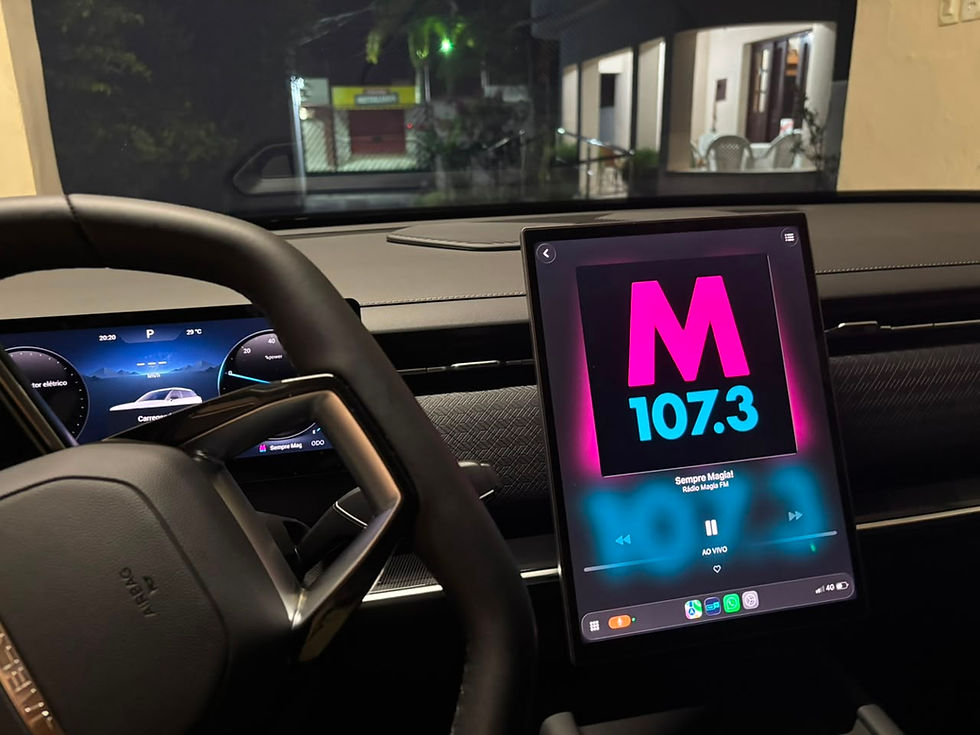
At the IBC 2025 event, important progress was highlighted. Manufacturers showcased new versions of DRM receivers, automotive solutions such as car radios with native DRM support, USB dongles, and integrated modules. These developments indicate that hardware is becoming more accessible and closer to mass market adoption.
Advances were also presented in the transmission chain. Broadcasters and suppliers demonstrated new head end and transmission solutions for DRM and also DAB plus, including digital audio resources, additional data services such as text, metadata, emergency alerts, and more robust interoperability.
Strengthening the role of DRM for countries with extensive AM and shortwave networks and infrastructure challenges
The 2025 report from the DRM Consortium highlights that DRM is particularly suitable for regions with strong dependence on medium wave and shortwave, territories with low FM penetration, remote areas, and locations that require large scale coverage. This reinforces its role as a viable alternative for developing countries.
The DRM technical standard offers strong advantages such as high spectral efficiency, the ability to carry multiple audio or data channels, lower energy consumption per transmitted bit, and strong performance under difficult propagation conditions. These characteristics continue to be persuasive arguments for expanding access to high quality radio.
Limits, challenges, and what is still missing for mass adoption
Despite the progress, the number of DRM receivers in the mass market remains limited. Historically, this has been one of the main bottlenecks. Even with the new products presented in 2025, penetration in vehicles, home radios, and portable receivers still depends on wider consumer adoption.
The adoption of DRM is still concentrated in specific regions such as Asia, parts of the Asia Pacific region, and some African countries, with very uneven global coverage. A complete transition from analog to digital broadcasting requires investment and favorable regulatory and public policy decisions.
Local broadcasting infrastructure, especially in countries where FM already dominates and AM or shortwave plays a smaller strategic role, may not justify migration to DRM. This reduces the potential for mass adoption in some markets.
Public and industry awareness of DRM benefits is still limited. Many broadcasting decision makers continue to adopt conservative strategies, preferring FM, internet based distribution, or other digital standards, which limits the practical reach of DRM.
A turning point, but not yet a global transformation
The year 2025 represents a potentially transformative moment for DRM. With the formal adoption by China and the emergence of new receivers and infrastructure, DRM is becoming a technically solid and feasible alternative, especially for markets with coverage challenges, interest in shortwave and longwave, or vast remote areas.
However, in countries where FM and internet distribution already dominate, mass adoption of DRM requires more than technical advances. It demands political will, clear regulatory frameworks, incentives for the production and sale of compatible receivers, and communication strategies to inform broadcasters and listeners.
Implications for Brazil and its current reality
Considering your focus on local FM radio, shortwave, and the context of small and medium radio stations in Brazil:
Brazil could benefit from DRM, especially in remote regions or rural areas where FM coverage is insufficient or where FM infrastructure is limited. However, this depends on firm regulatory decisions and incentives to support the adoption of compatible receivers.
Based on global trends in 2025, it is worthwhile to reopen the discussion on including DRM in suitable transmission channels such as AM and shortwave and to assess the cost effectiveness for local stations. This aligns with the perspective of your manual for reorganizing FM radio stations and your evaluations of technical and commercial feasibility.
Sources used to prepare this overview
DRM Consortium. DRM Standard Adopted for Domestic Short and Medium Wave Radio Broadcasting as a National Chinese Industry Standard. 2025. Available at: https://www.drm.org/drm-standard-adopted-for-domestic-short-and-medium-wave-radio-broadcasting-as-a-national-chinese-industry-standard/.
DRM Consortium. DRM Newsletter August 2025. 2025. Available at: https://www.drm.org/drm-newsletter-august-2025/.
Radioworld. China Goes for Digital Radio DRM. 2025. Available at: https://www.radioworld.com/global/china-goes-for-digital-radio-drm.
RedTech. DRM Steps Ahead at IBC2025. 2025. Available at: https://www.redtech.pro/drm-steps-ahead-at-ibc2025/.